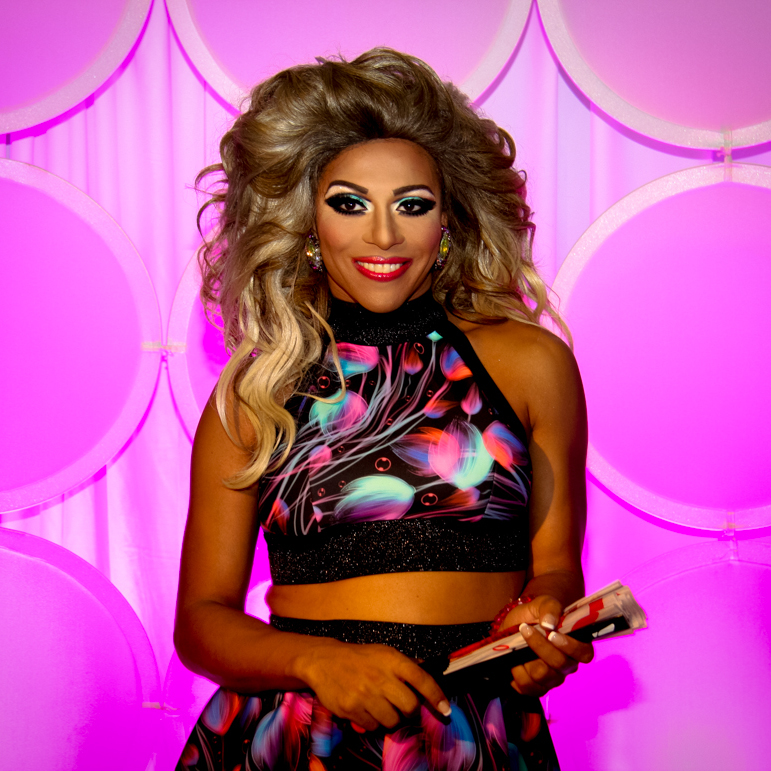
Own your state — be the #1 queen in your city

The Lounge

Kick off your heels, grab a cocktail, and play. Games, family trees, and good vibes only.

📖 Vocabulary

Match the queens! Flip two cards at a time. Find all pairs to win.

Get a PERFECT game (no mistakes!) and earn up to 33% off your first month subscription! Harder difficulty = bigger discount.

Moves: 0
Time: 0:00
Pairs: 0/6
Status: Perfect!
Matched
Matched
🌳

Build Your Drag Family Tree

Every queen has a chosen family. Add your drag mothers, daughters, sisters, and more to create your family tree.

Add a Family Member

Your Family (0 members)

No family members added yet. Search above to start building your tree.

💬

Iconic Drag Queen Quotes

Words of wisdom, shade, and sickening truth from the queens who changed the game.

RuPaul
“If you can’t love yourself, how in the hell you gonna love somebody else? Can I get an amen?”
👑 RuPaul
Shangela
“Halleloo!”
Shangela
Vanessa Vanjie Mateo
“Miss Vaaanjie... Miss Vaaanjie... Miss... Vaaanjie!”
Vanessa Vanjie Mateo
RuPaul
“We’re all born naked and the rest is drag.”
👑 RuPaul
Latrice Royale
“It is what it is... get those nuts away from my face!”
Latrice Royale
Alyssa Edwards
“I don’t get cute, I get drop dead gorgeous.”
Alyssa Edwards
Bianca Del Rio
“Not today, Satan. Not today!”
Bianca Del Rio
Trixie Mattel
“Drag will never be mainstream because drag is the antithesis of mainstream.”
Trixie Mattel
RuPaul
“When you become the image of your own imagination, it’s the most powerful thing you could ever do.”
👑 RuPaul
Alaska Thunderfuck
“Your makeup is terrible!”
Alaska Thunderfuck
Sasha Velour
“Drag is a political art. It exists to question everything, and if it’s not doing that, it’s not drag.”
Sasha Velour
RuPaul
“Reading is fundamental!”
👑 RuPaul
Jinkx Monsoon
“Water off a duck’s back.”
Jinkx Monsoon
Katya
“I’m not a regular queen, I’m a cool queen.”
Katya Zamolodchikova
RuPaul
“Don’t be afraid to use all the colors in the crayon box.”
👑 RuPaul
Conchita Wurst
“We are unstoppable.”
Conchita Wurst
Adore Delano
“I’m a freaking libra!”
Adore Delano
RuPaul
“Everybody say love!”
👑 RuPaul
👑 Visit RuPaul’s Tribute Page
Edward Kynaston, 17th century English boy player
Edward Kynaston (c. 1640–1712) — Restoration-era English “boy player” who performed female roles before women were permitted on the English stage. One of the earliest documented drag performers.

Drag didn’t start with RuPaul. The art form is older than the word for it — from Shakespearean stages where men played every female role, through Harlem ballrooms that built families for the rejected, to Stonewall fists thrown by drag queens of color, all the way to a global TV franchise. Here’s the lineage.

Pre-1900s — Foundations
Theater, ritual, and survival
Men playing female roles is older than recorded theater. Greek drama, Elizabethan stages (women weren’t allowed to act), Japanese kabuki onnagata, and Chinese opera all required female impersonation as craft. The word “drag” itself enters slang in the 1870s, reportedly because long skirts dragged across the floor.
1880s–1920s — Vaudeville era
Julian Eltinge becomes America’s first drag star
Julian Eltinge in costume, c. 1910s
Eltinge (1881–1941) headlined Broadway, owned his own theater on 42nd Street, and outsold most male leads when female impersonation was mainstream entertainment that filled theaters and sold Eltinge-branded cosmetics nationwide.
Late 1920s–early 1930s — The Pansy Craze
Gladys Bentley headlines Harlem’s speakeasies
Gladys Bentley, c. 1930, performing in tuxedo and top hat
Gladys Bentley (1907–1960) performed in tailored tuxedo and top hat at Harlem’s Clam House speakeasy, flirting openly with women in the audience while delivering risqué blues parodies. She was the most famous of the Pansy Craze performers, a brief era when drag became respectable nightlife entertainment in NYC, Chicago, and beyond. The end of Prohibition in 1933 and a wave of “anti-degeneracy” laws drove the scene underground for thirty years.
1960s — Ballroom is born
Crystal LaBeija founds the House system
After being snubbed at white-dominated pageants, Crystal LaBeija organized the first Black drag balls in Harlem and founded the House of LaBeija around 1972. The House structure (chosen-family households led by a “mother”) became the foundation of ball culture — voguing, categories, walking, all of it.
June 28, 1969 — Stonewall
Marsha P. Johnson, Sylvia Rivera, Stormé DeLarverie
Stormé DeLarverie, c. 1958, with the Jewel Box Revue
When NYPD raided the Stonewall Inn, the resistance was led by drag queens, trans women, butch lesbians, and street kids of color. Stormé (a butch drag king, pictured here in 1958 with the Jewel Box Revue) reportedly threw the first punch. Marsha and Sylvia would later co-found STAR (Street Transvestite Action Revolutionaries), the first trans youth shelter.
1970s — Underground goes art
Divine, The Cockettes, Hot Peaches
Divine in Pink Flamingos, 1972
John Waters cast Divine (Harris Glenn Milstead) in Pink Flamingos (1972), making drag a fixture of midnight movies. The Cockettes in San Francisco and Hot Peaches in NYC fused drag with hippie commune theater. Boundary-breaking was the whole point.
1980s — AIDS and ballroom
Loss, family, and Paris is Burning
Willi Ninja, NYC, 1994
The AIDS crisis decimated the community; chosen families became survival infrastructure. Jennie Livingston’s 1990 documentary Paris Is Burning (filmed 1986–89) documented Harlem ball culture — Pepper LaBeija, Dorian Corey, Willi Ninja (pictured), Octavia St. Laurent — bringing terms like “reading,” “shade,” “realness,” and “mother” into mainstream vocabulary (often without credit).
1993 — The Supermodel moment
RuPaul’s “Supermodel (You Better Work)”
RuPaul, 2019 California Hall of Fame
RuPaul Andre Charles releases the single that pushes drag onto MTV and into living rooms. M.A.C. Cosmetics signs RuPaul as the first drag-queen spokesmodel in 1995. Lady Bunny’s Wigstock (1985–2001, revived 2018) becomes the world’s biggest outdoor drag festival.
February 2, 2009 — Drag Race premieres
Reality TV finds drag (and vice versa)
RuPaul’s Drag Race debuts on Logo TV with BeBe Zahara Benet as the first winner. Initially niche, the show jumps to VH1 in 2017 and explodes globally. By 2024, franchises exist in 15+ countries. Drag becomes a viable career outside of clubs for the first time.
2020s — Boom and backlash
Global drag scene, legislative pushback
Drag brunches, drag story hours, and drag race watch parties hit small-town America. Simultaneously, anti-drag bills surface in Tennessee, Texas, and other states. The community responds by deepening community organizing, mutual aid, and the very chosen-family structures that built drag in the first place.

Drag royalty — the ancestors

Julian Eltinge
1881–1941 · USA
The first drag star with mainstream box office. Owned the Eltinge 42nd Street Theatre and headlined Broadway when female impersonation was respectable entertainment.
Stormé DeLarverie
1920–2014 · USA
Drag king and Stonewall instigator. Performed in the Jewel Box Revue (the first racially integrated drag revue). Often credited as the woman whose arrest sparked the uprising.
Marsha P. Johnson
1945–1992 · USA
Black trans drag performer, Stonewall icon, STAR co-founder. The “P” stood for “pay it no mind.” Activist and survivor whose name we say.
Sylvia Rivera
1951–2002 · USA
Trans Latina activist and STAR co-founder. Spent her life fighting for the trans youth, sex workers, and homeless queer kids that “respectable” gay politics tried to leave behind.
Divine
1945–1988 · USA
Harris Glenn Milstead, John Waters’ muse in Pink Flamingos, Female Trouble, Hairspray. Pioneered punk-drag aesthetic.
Crystal LaBeija
1939–1982 · USA
Founded the House of LaBeija circa 1972, the first Black drag house. Mother of ball culture as we know it.
Pepper LaBeija
1948–2003 · USA
Mother of the House of LaBeija for over 20 years; central figure in Paris Is Burning.
Dorian Corey
1937–1993 · USA
Mother of the House of Corey and the soul of Paris Is Burning. The interview where she defines “reading” and “shade” is required watching.
Willi Ninja
1961–2006 · USA
Father of the House of Ninja. Voguing’s most precise technician. Taught Madonna’s “Vogue” choreography to the world without credit.
RuPaul
b. 1960 · USA
The first drag queen with a mainstream pop hit, the first M.A.C. spokesmodel, and the architect of modern Drag Race.
Lady Bunny
b. 1962 · USA
Founded Wigstock in 1985. The downtown New York drag scene’s ambassador and conscience for nearly 40 years.
Joey Arias
b. 1949 · USA
Cabaret royalty. Klaus Nomi’s collaborator, Manhattan downtown legend, and the kind of drag artist who reminds you the form was always about voice, not just face.

📺 Watch, read, and listen

  • Paris Is Burning (1990, Jennie Livingston) — the definitive document of 1980s NYC ball culture.
  • The Queen (1968, Frank Simon) — rare verité footage of the 1967 Miss All-America Camp Beauty Contest.
  • Wig (2019, HBO) — Lady Bunny’s Wigstock documentary.
  • Pose (2018–2021, FX) — the dramatic series that put ballroom on prime time.
  • The Stonewall Reader (2019, New York Public Library) — primary source anthology.
SICKENING!

Part of the Red Door Directory Network